
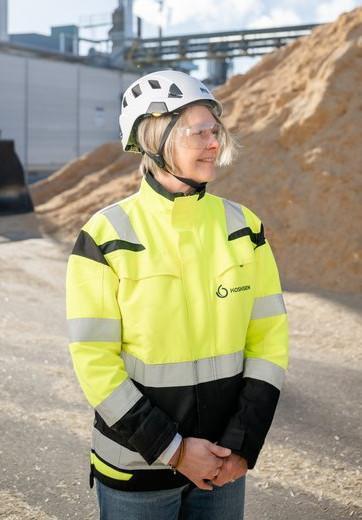
The EU’s new REACH regulation will tighten formaldehyde emission requirements for construction and interior materials starting in August 2026. “At Koskisen, the change does not come as a surprise, as we have been preparing for it for a long time and are able to switch fully to low‑emission products well before the official deadline,” says Product Manager Päivi Andersson. According to Andersson, Koskisen already had low-emission products available, so the transition to class E0.5 has been natural and quick to implement. Koskisen will adopt the new classification already on May 1, even though the law enters into force only on August 6, 2026.
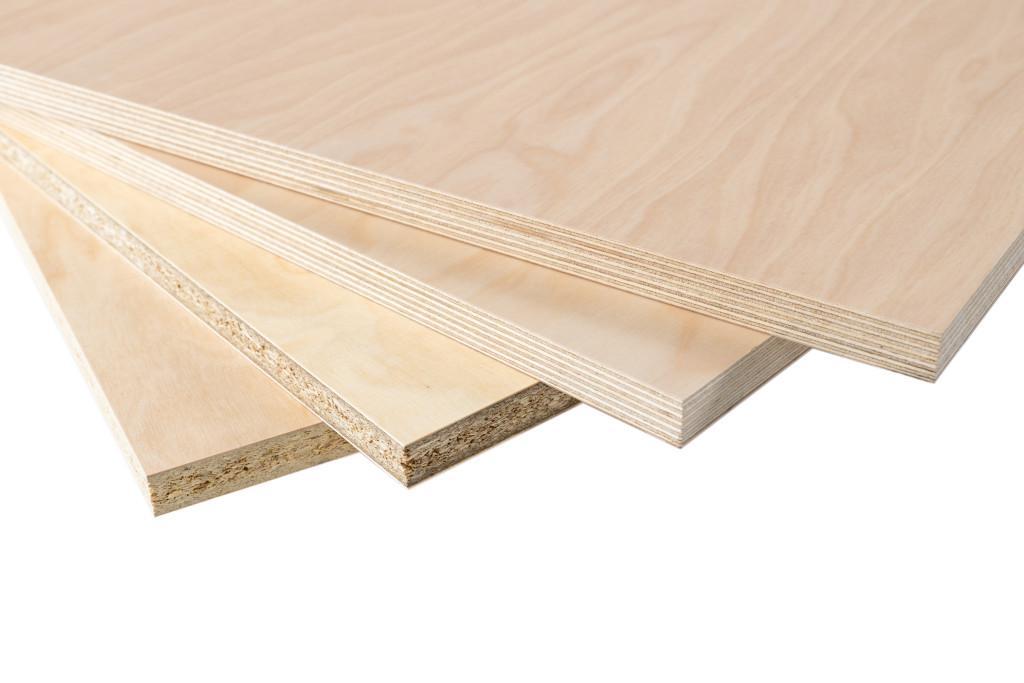
Products in class E0.5 mean significantly lower formaldehyde emissions; about half of those in the current E1 class. “For Koskisen, this change mainly concerns particleboard products, as plywood products have already been low-emission products. The manufacturing process does not need to be reorganized, nor will there be production interruptions, because we have worked with low-emission solutions for years,” Andersson notes.
To make sure that the products meet the requirements of the new legislation, they undergo testing both at Koskisen and by an external third party. This ensures that every product meets the emission limits specified in the REACH regulation. According to Andersson, the testing processes are already underway, and some products have already been approved. The remaining tests will be completed well before the beginning of May.
Koskisen’s proactive approach benefits the customer
Koskisen’s customers benefit from this proactive approach in several ways. Low‑emission products will enter the market early, making it easier for designers, builders, and manufacturers to transition to the new requirements without time pressure. Early adaptation also improves delivery reliability: customers do not have to prepare for sudden changes, reduced availability, or product switches in the middle of projects. According to Andersson, customers are already inquiring about upcoming requirements and are expecting updates. “By reacting early, we meet the expectations of the market,” Andersson says.
Another key benefit for customers is safety. Lower formaldehyde emissions improve product safety and enhance indoor air quality, which is a significant competitive factor for both consumers and professionals. Andersson emphasizes that Koskisen’s customers can trust that the products fully comply with EU legislation now and in the future.
In a broader context, the changes support the development of safer and healthier building materials. Regulation related to formaldehyde emissions has steadily tightened over the years, and the new regulation further strengthens the direction where consumer well‑being and environmental considerations are central. Koskisen’s way of responding to the change demonstrates that proactive, responsible action can be implemented without slowing production or causing market disruptions.
“At Koskisen, we invest in quality, safety, and comprehensive customer support in a way that today’s evolving EU regulation requires,” Andersson sums up.
What is the REACH regulation?
The REACH regulation is the EU’s key chemical legislation, aimed at protecting human health and the environment from the risks posed by chemicals, and at strengthening the competitiveness of the EU’s chemical industry. The regulation applies to chemical substances as such, in mixtures, and in articles. The REACH regulation affects most companies in the EU.
The EU REACH regulation (EC) No 1907/2006 governs the safe use of chemicals and also applies to wood-based panels—such as particleboard and plywood—when they are placed on the market in Finland and elsewhere in the EU.
REACH lays down rules on the registration, evaluation, authorization, and restriction of chemicals, as well as communication within the supply chain. REACH stands for Registration, Evaluation, Authorization and Restriction of Chemicals.